


by Krisztina Nagy
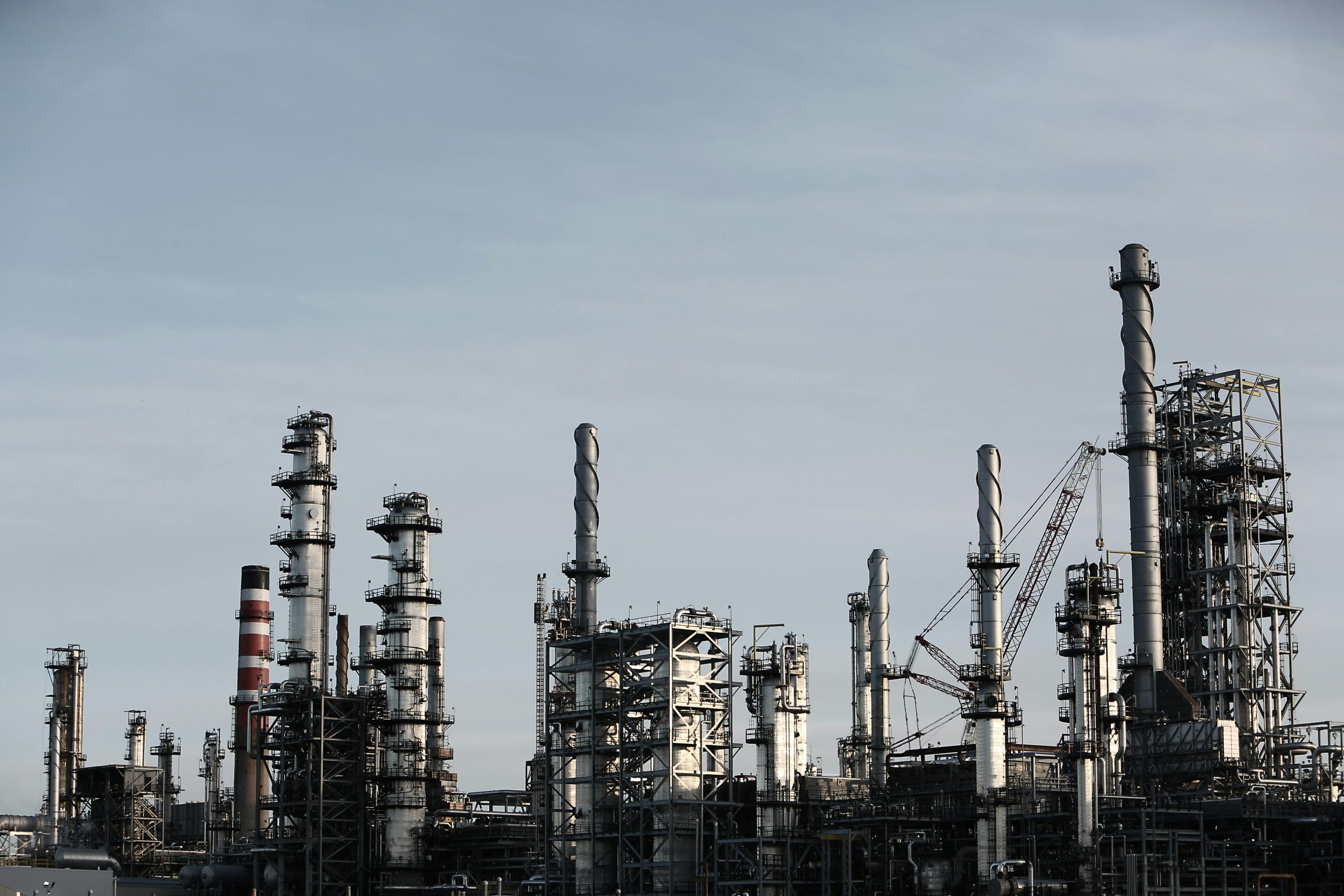
On 20 October two separate oil industry accidents occurred in Central Europe, prompting concern about possible external interference in critical energy infrastructure. Late that night, a fire broke out at Hungary’s largest refinery, MOL’s Danube Refinery in Százhalombatta; no injuries were reported, and the blaze was contained by the following morning. Earlier that day, an explosion occurred at the Petrotel–Lukoil refinery in Ploieşti, Romania – owned by the Russian company Lukoil – in which a 57-year-old worker sustained head and leg injuries. While investigations remain underway and neither company has confirmed foul play, the timing and similarity of the incidents provoked speculation about sabotage, particularly given both facilities’ links to Russian oil supplies.
In Hungary, the government quickly introduced the possibility of an attack. Prime Minister Viktor Orbán posted on Facebook: “The investigation is in full swing. We still do not know whether a malfunction, accident or external attack is behind this (…) The Polish foreign minister advised the Ukrainians to blow up the Druzhba oil pipeline. We hope it is not about this.” Officials including spokesperson Gergely Gulyás echoed the sentiment that external provocation could not yet be excluded. Meanwhile, Russian-aligned media promptly began circulating stories of a third incident in Slovakia, citing unverified claims of Ukrainian drone or sabotage operations targeting energy infrastructure.
Despite these narratives, MOL (Hungarian Oil and Gas Public Limited Company) said in a press conference that there were “no signs that any external tampering played a role” in the Százhalombatta fire. Similarly, the Romanian refinery owner reported the explosion occurred during maintenance work in a sewer channel and was not followed by a fire. At the same time, fact-checking groups flagged the Slovak incident story as a disinformation campaign rooted in Kremlin-aligned sources.
On October 22, Polish Foreign Minister Radosław Sikorski got into a public argument with Péter Szijjártó on X, and in a post addressed to Szijjártó, he expressed his hope that Ukrainian drone forces would disable the Friendship oil pipeline, also known as Druzhba. The post read: “Péter, I am proud of the Polish court, which ruled that sabotaging an occupier is not a crime. In fact, I hope that your brave compatriot, Major Magyar, will finally succeed in disabling the oil pipeline that fuels Putin’s war machine, and that you will be able to get oil through Croatia.“
Although the government narrative suggests Polish instigation, Sikorski published the aforementioned post on October 22, i.e., after the two oil industry incidents had occurred.
The Hungarian pro-government press has also published vague references, insinuations, and specific suggestions that there may be a “Ukrainian connection” behind the explosions, and that it cannot be a coincidence that two similar incidents occurred in the region within 24 hours. The Hungarian Világgazdaság (World Economy), for example, refers to the MTI statement as follows: “It is not yet clear what happened, and no scenario can be ruled out. Of course, it could have been a technical malfunction or human error. However, given the intensification of Russian and Ukrainian military operations in recent weeks, particularly those targeting energy infrastructure, it is also possible that some kind of organized action is behind these incidents.” As the news spread, conspiracy theories and speculation about Ukrainian involvement also appeared on social media.
Referring to the MTI (Hungarian news agency) press release, Világgazdaság wrote the following about the accident in Romania: “It is not yet clear what happened, and no scenario can be ruled out. In any case, the explosion occurred at a plant owned by one of Russia’s largest oil companies.” Other pro-government newspapers also raise the possibility of Ukrainian sabotage and elaborate at length on the fact that the Ploiești oil refinery is in Russian hands.
The Romanian oil refinery had already been shut down on October 17 for maintenance and inspection work, so the facility was not in operation at the time of the incident. Petrotel-Lukoil oil refinery posted a statement on Facebook describing that the accident was caused by a manhole cover blowing up at a collection pit. The detonation was not followed by a fire.
The Romanian media did not devote as much attention to the incident as the Hungarian media did: the major Romanian news portals reported on it briefly, and the local significance of the incident remained limited, presumably because public opinion in the country was still preoccupied with the deadly gas explosion that had occurred in Bucharest a few days earlier.
After two oil industry accidents, Russian propaganda also reported a false explosion in Bratislava
Following explosions at refineries in Hungary and Romania linked to Russia, reports on October 22nd told of another fire at a refinery in Slovakia, near Bratislava, linked to the Druzhba oil pipeline. An article published in the pro-Kremlin press begins with the words, “Oil refineries are burning one after another across Europe. What happened to the Slovakian refinery, which other refineries have burned down, and who suspects Ukraine?” Another article states: “Earlier, Sergei Goncharov, head of the International Association of Veterans of the Alfa Counter-Terrorism Unit, told NEWS.ru that Ukraine may have carried out acts of sabotage at oil refineries in Hungary and Romania.“
The analysis of kyivindependent.com on the case points out that Russian fake news refers to an article on a website called CZNews Info. At the beginning of the “source article,” an update draws the reader’s attention to the fact that the incident has not been officially confirmed.
According to LetsData‘s team specializing in disinformation, the narrative was widely disseminated by pro-Russian media figures, who placed it in the context of a “broader narrative accusing Ukraine of sabotage.” The explosions in Hungary and Romania were then used to support this claim. According to LetsData, the narrative spread primarily on Facebook and among Czech-language accounts, but also appeared on other platforms, notably Telegram and X, in English, Slovak, and Russian. Although the Slovak oil company Slovnaft completely denied the fire, the story nevertheless spread rapidly.
Hungary and Slovakia are the only EU member states that still receive oil through Russian pipelines, which explains why pro-Kremlin propaganda has begun spreading false reports about an explosion in Bratislava.

Funded by the European Union. Views and opinions expressed are however those of the author(s) only and do not necessarily reflect those of the European Union or European Commission. Neither the European Union nor the granting authority can be held responsible for them.

