

For decades, the economy of Miskolc has grappled with the structural crises that followed the political and economic transition of the 1990s. The leadership of Borsod county’s capital sought to respond with a long-term strategy, drawing on European Union resources to counter the city’s economic challenges. One of the most prominent achievements of this approach has been the expansion of the Miskolc Southern Industrial Park, realised with €4 million (HUF 1.5 billion) in EU support over recent years.
Although Borsod-Abaúj-Zemplén County is still often perceived as underdeveloped compared with western Hungary and Budapest, Miskolc has continued its efforts to attract multinational companies. In reality, the county’s industry already stands out on a national scale, and with new developments under way, further investments in the city are expected.
A Heavy Legacy
Miskolc’s economic difficulties are deeply rooted in the industrial restructuring that followed the transition. The collapse of its traditional heavy industries—particularly steel, iron and chemicals—and the crisis and eventual closure of the Diósgyőr Steel Works left a void that the city has yet to fully overcome.
The problems are wide-ranging: high unemployment, especially among low-skilled workers; an exodus of qualified professionals to other cities or abroad; and a steadily declining population. Over recent decades, Miskolc’s population has fallen consistently. Foreign direct investment has remained limited, local entrepreneurial capital is lacking, and economic diversification has progressed only slowly.
“Infrastructural shortcomings—outdated transport networks, the slow pace of rehabilitating industrial zones, and the environmental damage inherited from the past—continue to hinder the arrival of new investors,” a previous municipal report summarised.
A Cross-Generational Strategy
The creation and development of the Southern Industrial Park nevertheless shows how long-term planning and consistent implementation can yield results. The project began under the mayoralty of Sándor Káli and was carried forward under Ákos Kriza and Pál Veres, demonstrating the city’s ability to sustain an economic development strategy across political cycles.
The site was designated an Industrial Park in 2009, earned recognition as the Investor-Friendly Industrial Park of the Year in 2014, and in 2020 was accredited as a Science and Technology Park by the Ministry for Innovation and Technology.
European Union Support
The most significant phase of development took place between 2016 and 2020 under the Territorial and Settlement Development Operational Programme, financed entirely by EU funds to the value of HUF 1.5 billion. Backed by the European Regional Development Fund with 88% co-financing, the project sought to create an industrial park equipped with adequate infrastructure and transport connections to attract investors.
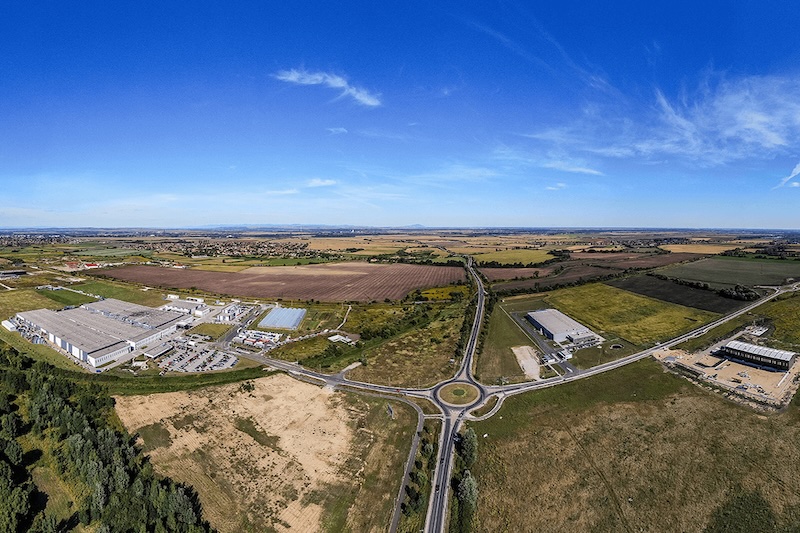
The expansion completed the north-south accessibility of the park, bringing drinking water and sewage networks to 120 hectares of land. A 40-50 hectare drainage and retention system for stormwater was installed, the Hejő stream bed was regulated, and a new two-lane connecting road with roundabout and lighting was built.
The project, formally titled Development of the Industrial Park and Industrial Areas in Miskolc, was implemented through a consortium led by the Municipality of Miskolc, with Miskolc Holding Municipal Asset Management Ltd. as partner.
Concrete Results and a Technological Orientation
The park’s area expanded from 93.5 to 247 hectares, and to date 19 companies have established operations there. These include Joyson Safety Systems Hungary (manufacturer of passive safety systems), GS Yuasa Hungary (producer of lithium-ion batteries), and Meleghy Automotive Hungary (automotive body parts), alongside firms from a range of other sectors.
Obtaining Science and Technology Park accreditation marked a particularly significant milestone. Such recognition is reserved for industrial parks focused on knowledge-intensive, innovation-driven enterprises. In Miskolc, the emphasis is on materials technology and intelligent systems. The concept rests on collaboration among resident firms, dual training models with local universities, and high value-added R&D activities. These in turn open new opportunities for grant funding and international cooperation. The city’s university is a distinct asset, producing specialists capable of meeting the demands of knowledge-intensive industries.
Future Prospects
The development of the Miskolc Southern Technology Park illustrates how strategic planning, effective use of EU funds, and consistent implementation can chart a new course for the city’s economic renewal.
The park boasts excellent transport links—adjacent to the M30 motorway and the Budapest-Miskolc railway line—and offers full-scale infrastructure for investors. Access to geothermal energy further enhances its appeal to companies seeking sustainable, energy-efficient production methods.
Although the city’s economic challenges remain profound and complex, the success of the Southern Technology Park shows that renewal is possible—provided that development efforts are pursued with long-term vision. Similar EU-funded industrial park projects, such as that completed in nearby Ózd between 2017 and 2021, underscore the transformative potential of such investments across the region.
(Source: borsod24.hu)
Funded by the European Union. Views and opinions expressed are however those of the author(s) only and do not necessarily reflect those of the European Union or European Commission. Neither the European Union nor the granting authority can be held responsible for them.

