


Author: Krisztina Nagy
In Hungary, numerous educational institutions have long struggled with severe infrastructural deficiencies: outdated buildings, deteriorating technical conditions, and a lack of modern equipment impede the daily routines of both students and teachers. Due to limited state funding, most schools receive insufficient support, causing the quality of education to often decline, exacerbated by their neglected environments. In this context, development funds provided by the European Union have offered significant relief, enabling many schools and public institutions in recent years to modernise, becoming more functional and conducive to learning.
One of the EU’s paramount objectives is to reduce disparities in development among member states. The cohesion policy, implemented through instruments such as the Cohesion Fund and the European Regional Development Fund, is central to this effort. These funds provide substantial support to Hungary, particularly targeting regions disadvantaged in comparison with more developed areas.
While public discourse often emphasises cases of misuse, corruption, or costly mismanaged projects, less attention is given to investments where EU funding has genuinely effected tangible improvements.
Some Educational Institutions Are Improving
In recent years, significant infrastructural enhancements have taken place in several Hungarian schools, supported by various EU grants. Kindergartens, nurseries, and schools in Debrecen, Pécs, Kazincbarcika, Kecskemét, and other cities have undergone modernisation, including energy efficiency and accessibility upgrades, while also receiving new technologies and equipment. These projects have not only improved the technical conditions of the institutions but have also enhanced the comfort and safety of students and teachers, fostering a 21st-century learning environment.
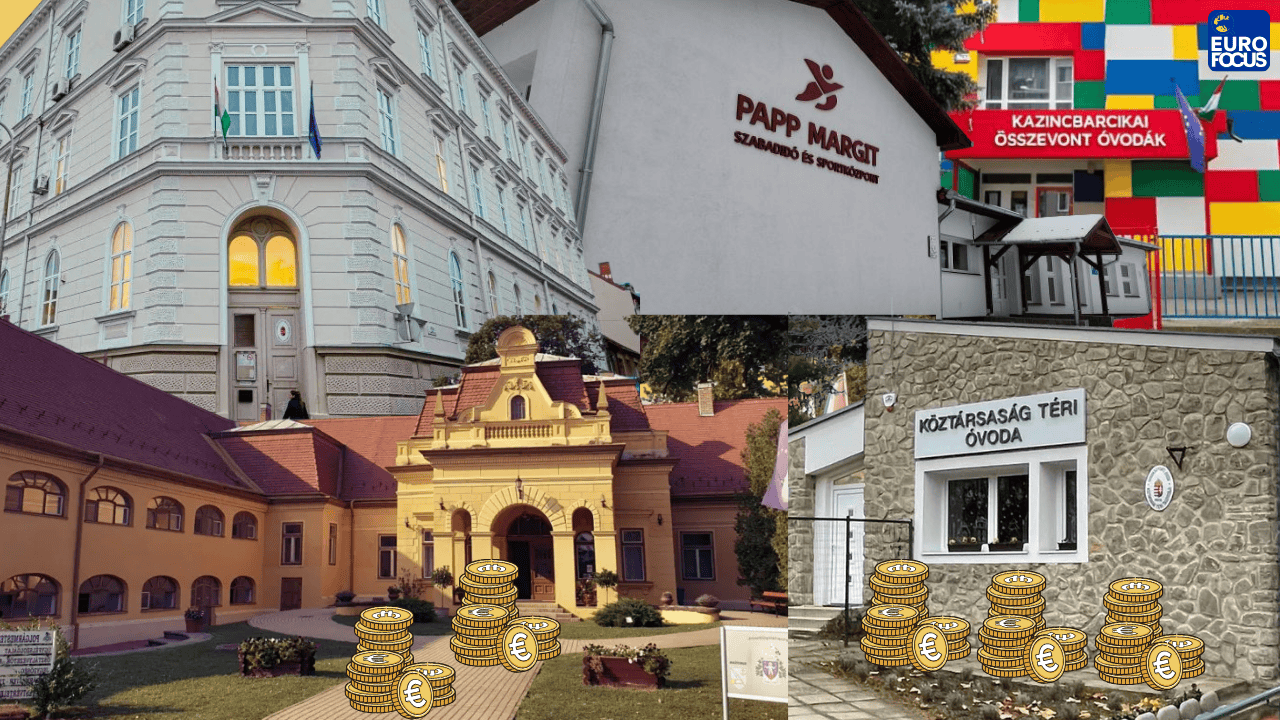
In Kazincbarcika, nearly HUF 670 million was invested in local kindergartens through two EU projects over recent years, aimed at improving child comfort, enhancing energy efficiency, and promoting environmentally conscious operation. These investments were partly funded by the TOP Plus programme. The first project renovated the Csokonai Street Main Kindergarten, the Százszorszép, and the Napsugár branch kindergartens with HUF 325 million in non-repayable funding, complemented by HUF 109 million in municipal co-financing. Renovations included roof and wall insulation, window replacements, and modernisation of heating and lighting systems.
In the second phase, also funded by a TOP grant, the Mesevár and Nefelejcs branch kindergartens underwent upgrades exceeding HUF 240 million, pursuing the same objectives. Originally, the Egressy Béni Cultural Centre was to be included, but the allocated funds were redirected to the kindergarten developments, while the cultural centre received separate EU funding for its renovation.
Many rural schools have also been modernized with EU funding. In Kazincbarcika, the iconic Irinyi János Református Oktatási Központ és Kollégium underwent comprehensive renovation with EU funding. The project aimed to bring the building—formerly a chemical college—up to modern energy efficiency and comfort standards while preserving its historical prestige and urban significance. Renovations included new windows, a modern heating system, full thermal insulation, and the installation of solar panels, rendering the institution not only energy-efficient but also more sustainable. The improved environment now significantly enhances comfort for both students and teachers, with the project supported by nearly HUF 250 million from the Environmental and Energy Efficiency Operational Programme.
The University of Pécs also oversaw extensive infrastructural upgrades across three schools completed by the end of 2023 entirely with EU cohesion funds. The HUF 800 million grant, fully non-repayable, facilitated the renovation of nearly 100 classrooms, energy efficiency upgrades, and significant equipment acquisitions.
Renovations extended to educational spaces and communal areas, including corridors, restrooms, and staff rooms, while a new running track was added to Babits Gymnasium’s sports yard. Modern, mobile school furniture, sports equipment, and musical instruments were purchased, promoting contemporary, project-based education. Additionally, 35 air-conditioning units were installed across the schools, improving comfort for students and teachers alike.
As part of IT improvements, 59 interactive smartboards, laptops, projectors, and desktop computers were provided, supporting both daily student learning and pedagogical training for University of Pécs education students. These upgrades directly benefit over 1,740 students and contribute substantially to creating a 21st-century educational environment.
Not only schools but also kindergartens and nurseries have been revitalised through EU support. Under the Territorial and Settlement Development Operational Programme Plus, nearly HUF 4 billion funded renovations for five kindergartens and nurseries in Debrecen. The EU contributed 83% of the funding, with the remaining 17% provided by the Hungarian government. Renovations aimed to modernise ageing buildings, improve energy efficiency, and achieve full accessibility, critical given the institutions’ technical condition and their role in child care.
Upgrades included replacing windows, insulation, water and sewage systems, floor and wall coverings, and installing renewable energy sources and energy-efficient lighting. Particularly significant works were undertaken at Angyalkert Kindergarten, where the entire plumbing system and sanitary facilities were replaced. These institutions will now operate with modern, eco-friendly technologies and improved infrastructure, offering staff a more comfortable working environment and children safer, more suitable spaces for learning and play.
Kecskemét’s Csipcsirip Nursery also underwent renovation, with a total investment of HUF 1.1 billion, including HUF 809.6 million in non-repayable EU funding and HUF 291 million contributed by the municipality. The project targeted modernising the Széchenyivárosi facility.
In Pécs, the Köztársaság Square Kindergarten was renovated at a cost of HUF 157.5 million, 131 million of which came from EU TOP programme funds secured by the previous municipal administration before autumn 2019, and 26.5 million from local co-financing. The building received full energy efficiency upgrades, including a new metal roof with solar panels, removal of old asbestos roofing, internal and external thermal insulation, replacement of 137 windows with modern, insulated units, upgraded heating with radiators and thermostatic valves, electrical network modernisation, new flooring, refurbished bathrooms, and interior painting. Accessibility improvements included a new parking area, wheelchair-accessible WC and ramp, and ICT signage.
Across Kecskemét, numerous educational institutions have been modernised with EU funds. Between 2014–2020, more than HUF 7.2 billion in non-repayable grants from the European Regional Development Fund facilitated upgrades to kindergartens, nurseries, and schools, including new windows, facade refurbishments, establishment of new kitchens, and improved working conditions for staff, with capacity expansions allowing more children to attend. The ERDF’s objective of reducing regional disparities and improving quality of life is clearly illustrated in Kecskemét, where EU funding has delivered tangible benefits to local communities, despite political discourse often overlooking these successes. The 2021–2027 cycle promised further funds, although the European Commission has suspended over half of the payments amid transparency and rule-of-law concerns. Nonetheless, Kecskemét exemplifies the concrete impact of such funding.
Several Rural Public Institutions Also Renovated with EU Funds
Beyond schools, multiple public institutions have been renovated with EU support. In Szentlőrinc and Ormosbánya, substantial municipal projects not only improved building conditions but also enhanced community quality of life. Through the TOP+ programme and EU funding, local government buildings and sports centres underwent energy efficiency upgrades, promoting sustainability and reducing operating costs.
In Szentlőrinc, HUF 200 million funded energy upgrades to municipal buildings under TOP+, including the Cultural Centre, library, kitchen, and one local government building. Of this, HUF 195 million came from EU (cohesion, ERDF) funds, and HUF 5 million from the Baranya County Government, with no local contribution required. Renovations included insulation, window replacement, heating modernisation, heat pumps, and solar panels. The facades of protected historic buildings retained their original appearance, with wooden windows installed and insulation applied internally. The project aimed to reduce operational costs and CO₂ emissions while improving working conditions. The Cultural Centre, central to the 6,000-strong town, hosts over 50 events annually and weekly clubs.
In Siklós, the Örsi Ferenc Cultural House, named after the author of Captain of Tenkes, was renovated with EU funding. The municipality secured HUF 300 million in 2022 via the TOP programme. Renovations began in mid-March, refurbishing the interior, sanding and varnishing parquet floors, modernising lighting, updating restrooms, refurbishing the gallery, and acquiring equipment to support community events. Parking facilities were also enhanced for both cars and bicycles. This renovation is part of a broader EU-funded project for complex community development and transport in Siklós, which includes HUF 300 million in transport infrastructure improvements.
In Ormosbánya, a town of 1,500 residents, the municipal sports centre was upgraded with nearly HUF 300 million in non-repayable EU funding, modernising the facility to provide contemporary sports opportunities for the community. Renovations included comprehensive refurbishment of football and running tracks, construction of basketball and smaller handball courts, a teqball court with rubber surfacing, fitness and training rooms, outdoor rest areas, a cooking area, seating, and a new playground. Building infrastructure was also modernised, including insulation, window replacement, electrical upgrades, and a heat pump-based heating system. Equipment procurement and free parking infrastructure were additionally provided.

Funded by the European Union. Views and opinions expressed are however those of the author(s) only and do not necessarily reflect those of the European Union or European Commission. Neither the European Union nor the granting authority can be held responsible for them.

